Google, Apple reveal more details on huge contact tracing initiative
On Friday, April 10, news broke that Google and Apple would team up to offer contact tracing solutions for each Android and iOS working methods to assist in the struggle towards the COVID-19 pandemic. Restricted details have been introduced initially, although a simplified overview of the system was released to assist shed some mild on simply how these tech giants would build this technique into Android and iOS.
Now, Google and Apple have slightly pulled again the curtain on how this technique shall be carried out and what precautions they’re taking to make sure consumer knowledge remains protected.
First, what are you talking about?
Earlier than you continue reading right here, go back and read the temporary overview of what Google and Apple announced on Friday. Google and Apple need to use our smartphones to assist cease the unfold of COVID-19 by letting users know in the event that they’ve are available contact with somebody who has tested constructive for the virus. The tactic with which Google and Apple shall be monitoring customers is through a course of referred to as contact tracing.
Contact tracing is the identification and follow-up of individuals who might have come into contact with an affected contact. To simplify it more, should you are available contact with somebody who has been confirmed to have been recognized with COVID-19, Google and Apple want you to be notified as soon as attainable so you possibly can take the required precautions.
Google and Apple envision the next state of affairs to happen as soon as the contact tracing system is in place:
- Two individuals (Individual 1 and Individual 2) have a dialog collectively, face-to-face, for 10 or so minutes.
- Throughout this time, each events’ phones are in shut vicinity to at least one another, speaking via privacy-preserving beacons by way of Bluetooth LE.
- Later, Individual 1 will get the news that they’ve been recognized with COVID-19.
- With Individual 1’s consent, the telephone will push the last 14 days of keys for their broadcast beacons to a remote server.
- Meanwhile, Individual 2’s telephone periodically checks broadcast beacon keys to see if anyone they’ve are available contact with has examined constructive for the virus.
- Individual 2’s telephone downloads all constructive broadcast beacons and finds a match with Individual 1.
- Individual 2 then gets a push notification saying that they've been in touch with somebody who has tested constructive for COVID-19.
- From this notification, Individual 2 can click on a link to get extra info on what to do next.
Android and iOS are very, very totally different ecosystems, though, so it’s not as straightforward as building a single app, letting everyone download it, and calling it a day. To be able to guarantee consumer privateness, interoperability between each ecosystems, and device-specific points (just like the impact these options may need on phones’ battery life) are stored in verify, Google and Apple are working to build contact tracing into Android and iOS on a system degree.
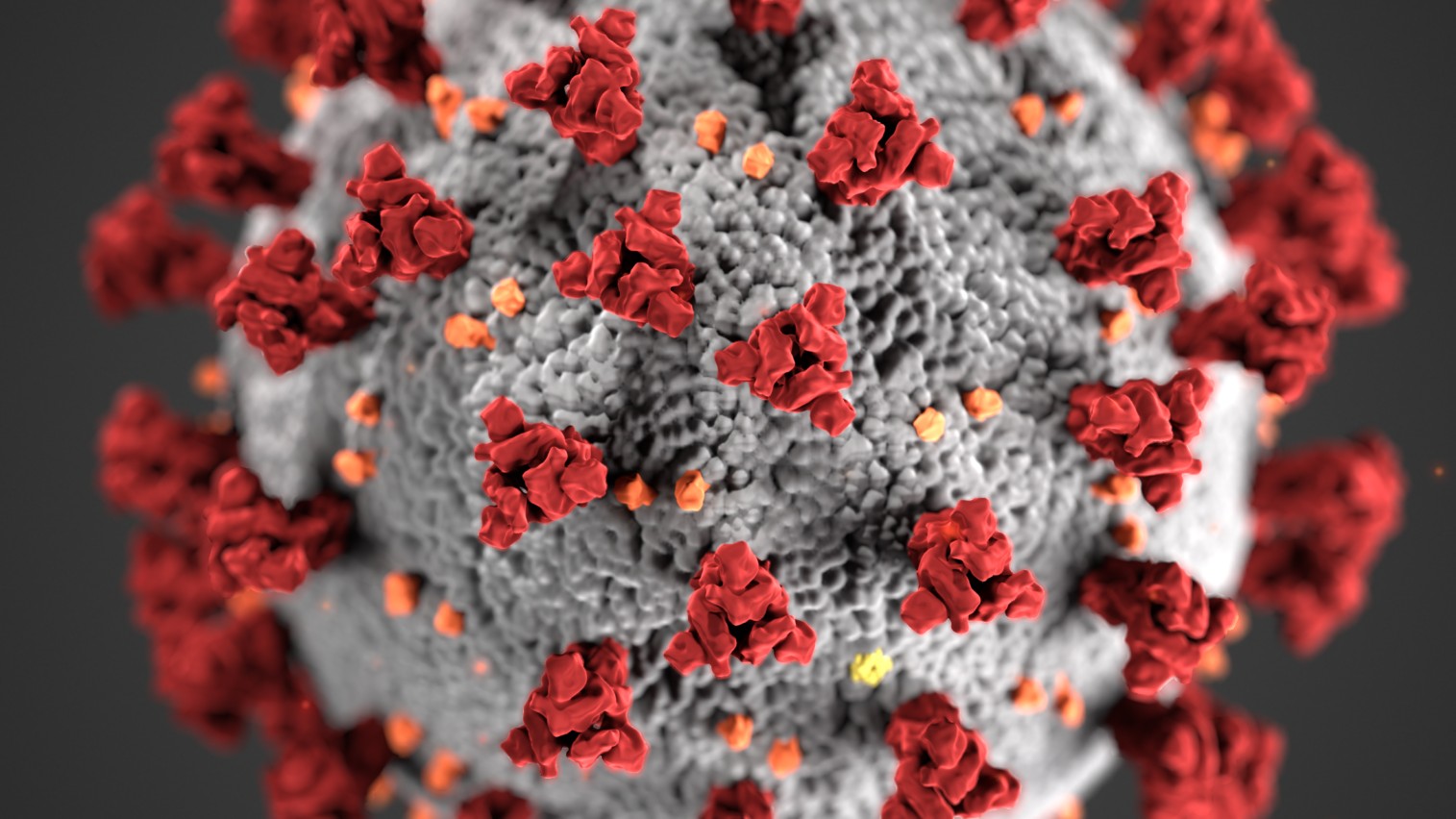
Why it's worthwhile to keep residence in the course of the coronavirus pandemic
How does this technique work?
Google and Apple held a press briefing Monday that helped answer a few of our most necessary questions on how this technique will work.
First thing’s first: Google and Apple aren’t making an app. They’re making an software programming interface (API) that permits third parties to utilize sure features inside an operating system. Google and Apple make the API, roll it into Android and iOS, and third-parties (in this case, public health authorities) use that API in their own apps to assist determine and monitor affected customers and the individuals they could have are available contact with.
In mid-Might, Google and Apple will each release an API that third events will have the ability to use in their apps. This API shall be interoperable between Android and iOS at a device degree.
Ultimately this performance could also be built into Android and iOS at a device degree, but that may take months. Even then, users will doubtless have to download third-party public health apps to submit any info.
What about Android fragmentation?
As talked about, Google and Apple are very totally different operating techniques. When Apple issues an OS update, most of its customers are capable of receive that update inside every week or so. Android is different, in that there are such a lot of Android units from different manufacturers, it might be close to inconceivable to roll out an OS update that would work on all Android units.
That’s why, in mid-Might, Google shall be releasing an replace to Google Play Services that may deliver help for the new contact tracing API. On the similar time, Apple will release a full-fledged iOS update for iPhones.
What happens then?
The API is just a part of the battle. As soon as the API has been revealed, individual public well being authorities will need to construct it into their purposes. Google and Apple will present sample apps for public well being authorities to make use of as a place to begin if they don’t already have an app of their very own.
Using (or not using) these sample apps from Google and Apple will ensure every public well being authority’s app could be as custom-made or as bare-bones as they’d like. Primarily, public well being authorities can choose to simply reskin Google/Apple’s pattern apps or do a full-on rewrite of the apps to make sure it really works for them.
As soon as the apps are developed by individual public health authorities, customers might want to obtain those apps from the Google Play Store and Apple App Retailer. This is the tough half. Enough users have to belief the service to the point that they turn over their personal info, in any other case the entire system gained’t work very nicely.
How are Google and Apple making certain consumer privacy?
It seems like Google and Apple are doing this to gather your knowledge, so I wouldn’t blame you for feeling like this can be a violation of your privateness. Nevertheless, that’s not likely the case right here.
This contact tracing implementation will probably be utterly opt-in, so users have to intentionally say sure to this permission if they want their info to be tracked. In a perfect world, everybody who downloads their public health authority’s software would opt-in to contact tracing, but neither Google nor Apple will probably be making this obligatory.
Regardless of which operating system or app you employ, there's completely zero geolocation use. Google and Apple literally aren’t accumulating that knowledge. Additionally, the complete record of individuals you’ve are available contact with does not depart your telephone until you select to share it. Every little thing stays regionally in your smartphone, so you don’t need to fret about your sensitive location knowledge being stored in a distant server.
Speaking of servers, the Google spokesperson we spoke with made it some extent to ensure all knowledge servers are decentralized, which means there isn’t just one server with all contact tracing info saved on it. Governments can even run their own servers in the event that they’d like.
Also, we'd not even need to consider “servers” in the conventional sense. The servers which house this knowledge ought to actually be considered extra as broadcast mechanisms. They include solely enough info to broadcast knowledge to individual purposes, and knowledge is simply saved for 14 days.
Google and Apple made it clear that they're working day in and day trip to implement this API on time. We may have extra time to talk with Google and Apple representatives in the future, but for now, we hope some of this info helped clear issues up.
Extra posts about Coronavirus


Delta City | Tech News
Get Bitcoin just for watching YouTube | http://getbitcoin.gq/
No comments: