Of Grits, Lox, and the SAT
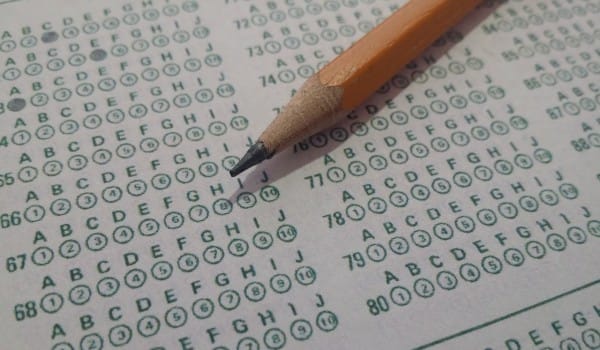
Though it has grown quite a bit over the past few many years, in the mid-1980s, Tulsa, Oklahoma was a much sleepier place.
In some ways, it jogged my memory of my hometown, Nashville: scorching and ever-prayerful, with church buildings dotting the panorama and defining much of the group’s tradition. In the case of Tulsa, that hegemonic Christianity was capped off by a 60-foot pair of bronze, praying palms outdoors Oral Roberts University’s “City of Religion,” a medical middle built by the televangelist founding father of the school, based on legend, after a 900-foot tall Jesus commanded him to do so.
No regular hospital, the middle blended faith therapeutic with drugs, working underneath the impression that most cancers would yield as readily to the facility of heavenly entreaties as it'd to chemo and radiation.
Which seems not to be true, and which could help clarify why the power went bankrupt and closed a number of years later. For those wondering, the 30-ton praying arms have been then moved to the primary campus of Oral Roberts College, a place the place college students should take pledges not to lie, curse, drink, smoke or interact in sexual activity, and where, subsequently, a bit divine intervention may properly be needed.
In any occasion, it was the summer time of 1986, the primary time I visited Tulsa for the Nationwide Forensics League’s nationwide high school speech and debate event.
On or concerning the second day in the metropolis, three of us from Nashville and one debater from New York went across the road from our lodge to a Waffle House for breakfast. Although Waffle House was nothing notably special for us, coming from the south, where it has lengthy been a vacation spot for hash browns cooked more methods than there are stars in our galaxy, for the New Yorker, it seemed more of a cultural revelation.
I can’t recall what Robert, Todd or I ordered, though I am positive it involved one or one other fashion of the above-mentioned shredded potatoes, grease, and the requisite amount of toast wanted to soak it up.
But I recall quite clearly what David ordered as a result of he did it with such excitement, like a kid receiving a new puppy. He didn’t even have to learn the menu. He had recognized what he needed as soon as he walked in, and minutes later, enthusiastically wanting up on the waitress, he ordered it in a fashion befitting one thing from a Woody Allen film:
I would really like a grit, please.
That might be grit, singular.
As in, just one grit, as a result of having never had them before, how can one know if one will like them enough to want grits, plural? Higher to start out sluggish and see what occurs.
The second was good for amusing, and even David appeared to appreciate the humor of it once his culinary error was explained.
There was no disgrace in his not understanding what grits have been, just as there can be no disgrace in a child from Yazoo, Mississippi missing familiarity with lox and bagels or any of a number of other things that Jewish youngsters in New York, like David, have grown up with for generations.
The experience was a reminder that what we know — what any of us know — is a perform of that to which we now have been exposed. It says nothing about our capability for studying. It's merely an indicator of what we all know at a specific second in time.
. . .
And this is what brings me to the SAT and the topic of standardized testing as a result of this story is relevant to that subject on two ranges.
First, as a result of as with the information of grits or lox, figuring out the fabric on standardized exams says little about somebody’s capability to know the material. It merely reflects the sort of content material with which test-takers are acquainted as a result of it displays their backgrounds or the standard of schooling they acquired. It says nothing about aptitude for studying, which is probably why even the makers of the SAT decided a few years ago that the letters not stood for something. The A not stands for aptitude. It stands for nothing, as with the S or the T, a minimum of to hear the parents at the School Board tell it.
Oh, and speaking of the School Board, which owns and administers the SAT?
It’s headed up by its ninth president presently, the holder of a B.A. in Philosophy from Yale, a Masters in Historic Philosophy from Cambridge, a well-respected, clever and thoughtful schooling reformer, once named considered one of Time Magazine’s 100 most influential individuals on the planet.
He was also a former debater at New York’s Stuyvesant High Faculty.
And, most significantly, the notorious orderer of one single, solitary grit in Tulsa, Oklahoma in the summer of 1986: David Coleman.
The same David Coleman who just lately shepherded in the School Board’s choice to report an “adversity score” to high schools so as to offer admissions workplaces with information about the advantages or disadvantages experienced by test-takers, thereby serving to faculties better assess a scholar’s precise potential.
On the one hand, I can’t help but nod in agreement with David’s acknowledgment that, as he put it lately to the Related Press:
We’ve obtained to confess the reality, that wealth inequality has progressed to such a degree that it isn’t truthful to take a look at check scores alone…You should take a look at them in context of the adversity students face.
Very much so and properly stated, reflecting a practical and moral logic befitting a Yale and Cambridge Philosophy grad.
Then again, and placing aside his genuine want for extra equitable instructional outcomes, Coleman’s rationale for the adversity index can also be straightforward to imagine as a type of injury control; as a solution to keep the public’s confidence in standardized testing at a time when scandal has only deepened skepticism concerning the worth of such instruments.
In any case, it was simply this spring that the Varsity Blues mess erupted, exposing the best way that wealthy mother and father have been paying others to take exams for his or her youngsters or otherwise fabricate credentials to get their youngsters into faculties where they didn’t belong.
Towards this backdrop, and in an surroundings the place over 1000 colleges have gone test-optional — with no negative impact on academic quality or subsequent performance differences between those that submit scores and people who don’t — one would think about the School Board may wish for a option to restore public confidence within the legitimacy and equity of testing.
However whereas the adversity rating a minimum of winks at fairness and equity, by suggesting the significance of a extra holistic admissions evaluation, in follow, it's going to do little to deal with the underlying flaw in the SAT and other standardized testing batteries. Indeed it reveals that flaw and proves what critics have long instructed: that the check merely reflects and then replicates present societal inequities. It isn't a “widespread yardstick” by which scholar means could be really measured.
. . .
Contemplate this:
If the SAT is a legitimate predictor of school success, and all the time has been, even without an adversity index — which is what the School Board claims and has beforehand gone to great lengths to “prove” — then college students with greater scores, regardless of the benefits that produced them really do make higher school students, and those with decrease scores, irrespective of the disadvantages that specify those, really are less succesful.
In fact, I feel that’s all bullshit, but for many who administer these checks, how can they not consider it? And if they do, how can they make a case for adding the adversity index?
In any case, if reporting adversity scores leads to the admission of scholars who scored lower however are seen as capable because of the obstacles they overcame, one in every of two things will happen: both these college students will succeed, during which case the check was by no means predictive of potential; or they won't succeed, by which case the School Board is setting them up for failure.
And no matter which is true — and I’m betting it’s the previous, relatively than the latter typically — the School Board comes out wanting shitty.
Either they're peddling a check meaning little abstracted from a variety of social elements, and which can't predict which students are able to success (by which case there isn't any value to it), or they're making adjustments that may trigger college students to be admitted to colleges for which they don't seem to be prepared. During which case they’re being real assholes. But whichever it is, one thing is obvious: they are either undermining the sensible case for the continued existence of the School Board, or the moral case for it.
If Coleman believes (as I think he does), that the adversity index will reveal many succesful college students who deserve a shot at more selective universities, and likewise reveal many privileged students for whom that 1450 really ought not to be seen as all that impressive, then what is the real value of the check anymore?
If high school grades are much better predictors of scholar success in school than SAT scores — regardless of huge differences in class quality — such that when we examine college students with comparable GPAs, there's nearly no additional predictive validity to be gained by contemplating check scores, then why proceed to use the check?
And if high school grades are far much less related to at least one’s household economic status than check scores, such that focusing on them will permit for higher class and racial variety in school admissions, then why not encourage faculties to look principally at prior educational efficiency over four years, moderately than the 4 hours needed to take the SAT?
As for rewarding the overcoming of obstacles, why do schools need the School Board and their inflexible adversity index rating as a middle man on this process?
Why not merely be sure that their admissions groups know find out how to assess scholar willpower and perseverance themselves, maybe by including non-cognitive variables that test directly for these things of their evaluations?
And never just perseverance within the face of financial obstacles but in addition obstacles ignored by the adversity rating just like the pressures of stereotype threat.
As social psychologist Claude Steele and his colleagues have long demonstrated, even middle class and prosperous black students rating lower on standardized checks than whites, not because they are less capable or unprepared but due to additional test anxiety associated to the worry of doing badly and thus confirming destructive group stereotypes in the eyes of others.
Viewing obstacles to larger check scores as merely class-related takes a posh, plural drawback and simplifies it to a single adversity number that overlooks these unbiased racial dynamics.
Please understand, I recognize what David Coleman is making an attempt to do and the truth that for years he’s dedicated himself to the aim of manufacturing higher instructional fairness. I respect his recognition that when assessing scholar talents it truly is necessary to know the obstacles they faced and their willpower to overcome those obstacles.
But in relation to schools’ capability to evaluate the willpower of applicants — or, ya know, their grit — it's value remembering that as at the Waffle House that grit isn't singular, but somewhat plural and much more difficult than some may understand.
I’m an antiracism educator/writer. I Facebook & tweet @timjacobwise, podcast at Converse Out With Tim Sensible & publish bonus content at patreon.com/speakoutwithtimwise
—
This publish was previously published on Medium and is republished right here with permission from the writer.
—
◊♦◊
Talk to you soon.
For those who consider within the work we're doing right here at The Good Men Undertaking and need to be a part of our calls regularly, please be a part of us as a Premium Member, at present.
All Premium Members get to view The Good Men Venture with NO ADS.
Need extra information? A complete list of benefits is here.

—
Photograph credit: Pixabay
The submit Of Grits, Lox, and the SAT appeared first on The Good Men Project.
Omega Oinion | Lifestyle Blog
Get Bitcoin just for watching YouTube | http://getbitcoin.gq/
No comments: