How the new coronavirus stacks up against SARS and MERS
Coronaviruses, one among quite a lot of viruses that cause colds, have been making individuals cough and sneeze seemingly ceaselessly. However sometimes, a brand new model infects individuals and causes critical sickness and deaths.
That is occurring now with the coronavirus that has killed at least 26 people and sickened at least 900 since it emerged in central China in December. The World Health Organization is monitoring the virus’s spread to see whether it'll turn into a global public health emergency (SN: 1/23/20).
Among the ailing are two individuals within the United States who contracted the virus throughout travels in China. A Chicago lady in her 60s is the second U.S. case of the new coronavirus, the Centers for Illness Management and Prevention confirmed January 24 in a news convention.
Officials are at present monitoring 63 individuals across 22 states for indicators of the pneumonia-like disease, together with fever, cough and different respiratory symptoms. Of these individuals, 11 have tested unfavourable for the virus. Two, including the most recent case and another patient in Seattle, examined constructive, the CDC reported (SN: 1/21/20).
France reported two instances on January 24 as properly, the primary in Europe.
A lot still remains unknown concerning the new coronavirus (SN: 1/10/20), which for now's being referred to as 2019 novel coronavirus, or 2019-nCoV. & Classes discovered from previous coronavirus outbreaks, together with severe acute respiratory syndrome, or SARS, and Center East respiratory syndrome, or MERS, might help health officers head off a few of the more critical penalties from this virus outbreak.
What are coronaviruses?
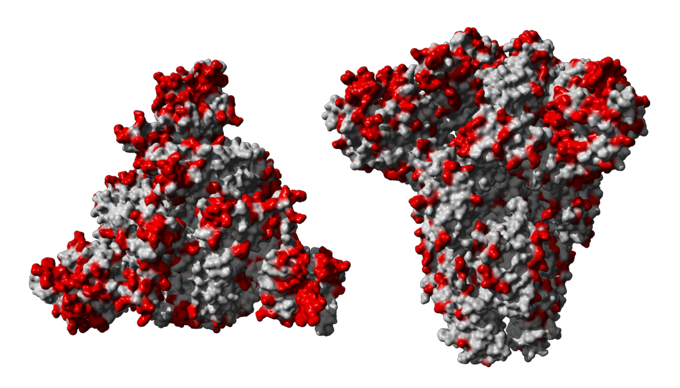
Coronaviruses are round and surrounded by a halo of spiky proteins, giving them a resemblance to a crown or the solar’s wispy corona.
4 main classes, or genera, of coronavirus exist. They’re recognized by the Greek letters alpha, beta, delta and gamma. Solely alpha and beta coronaviruses are recognized to contaminate individuals. These viruses spread by way of the air, and simply four varieties (often known as 229E, NL63, OC43 and HKU1) are liable for about 10 to 30 % of colds around the globe.
What makes a virus a coronavirus is just loosely enshrined in its DNA. “The coronavirus designation is much less concerning the genetics and more about the best way it seems underneath a microscope,” says Brent C. Satterfield, cofounder and chief scientific officer of Co-Diagnostics, a firm based mostly in Salt Lake Metropolis and Gujarat, India, that is creating molecular exams for diagnosing coronavirus infections.
Coronaviruses’ genetic makeup is composed of RNA, a single-stranded chemical cousin of DNA. Viruses in the family typically aren’t very comparable on the genetic degree, with some varieties having more differences between them than people have from elephants, Satterfield says.
The new virus’s proteins are between 70 and 99 % equivalent to their counterparts within the SARS virus, says Karla Satchell, a microbiologist and immunologist at Northwestern College Feinberg Faculty of Drugs in Chicago.
How dangerous is a coronavirus an infection?
Often coronavirus sicknesses are fairly delicate, affecting simply the upper airway. However the brand new virus, in addition to each SARS and MERS, are totally different.
Those three kinds of betacoronaviruses can latch onto proteins studding the surface of lung cells, and penetrate much deeper into the airway than cold-causing coronaviruses, says Anthony Fauci, director of the U.S. Nationwide Institute of Allergy and Infectious Illnesses in Bethesda, M.D. The 2019 version is “a illness that causes extra lung illness than sniffles,” Fauci says.
Injury to the lungs could make the viruses deadly. In 2003 and 2004, SARS killed almost 10 % of the eight,096 individuals in 29 nations who fell sick. A complete of 774 individuals died, in response to the World Well being Organization.
MERS is much more lethal, claiming about 30 % of individuals it infects. In contrast to SARS, outbreaks of that virus are nonetheless simmering, Fauci says. Since 2012, MERS has brought on 2,494 confirmed instances in 27 nations and killed 858 individuals.
MERS can spread from person to person, and some “superspreaders” have passed the virus on to many others. Most famously, 186 individuals contracted MERS after one businessman unwittingly brought the virus to South Korea in 2015 and unfold it to others. Another superspreader who caught MERS from that man passed the virus to 82 people over just two days while being treated in a hospital emergency room (SN: 7/eight/16).
Proper now, 2019-nCoV seems to be less virulent, with a few 4 percent mortality rate. However that number continues to be a shifting goal as extra instances are recognized, Fauci says. As of January 23, the new coronavirus had contaminated more than 581 individuals, with a few quarter of these turning into significantly sick, in accordance with the WHO. By January 24, the variety of reported infections had risen to no less than 900.
An analysis of the illness within the first 41 sufferers recognized with 2019-nCoV from Wuhan, China suggests that the virus acts similarly to SARS and MERS. Like the other two, 2019-nCoV causes pneumonia. But in contrast to these viruses, the brand new one rarely produces runny noses or intestinal symptoms, researchers report January 24 in the Lancet. Most people affected in that first group have been wholesome, with fewer than a 3rd having continual medical circumstances that would make them more weak to an infection.
Illness tracker
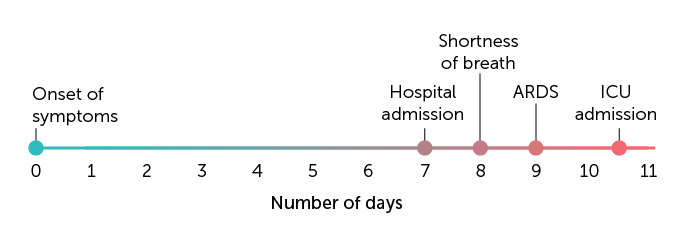
An infection with a brand new coronavirus begins with an onset of symptoms together with fever, cough and fatigue. Those signs can then intensify fairly shortly, resulting in hospital admission and acute respiratory disease syndrome, or ARDS (median time from onset of signs, shown).
How fast a new coronavirus can sicken
The place do new coronaviruses come from?
Coronaviruses are zoonotic, which means they originate in animals and typically leap to humans. The first 2019-nCoV infections detected in December have been in patients who had visited the Huanan seafood market in Wuhan. The market was closed January 1, however health officials have yet to determine from which sort of animal the virus jumped to people.
Bats are sometimes regarded as a supply of coronaviruses, but generally they don’t cross the virus immediately on to humans. SARS in all probability first jumped from bats into raccoon canine or palm civets earlier than making the leap to people. All the pieces necessary to re-create SARS are circulating among bats, although that virus has not been seen since 2004 (SN: 11/30/17).
MERS, in the meantime, went from bats to camels before leaping to humans (SN: 2/25/14). A paper revealed January 22 in the Journal of Medical Virology suggests that the brand new coronavirus has elements from bat coronaviruses, but that snakes may have passed the virus to humans. However many virologists are skeptical that snakes are behind the outbreak (SN: 1/24/20).
How contagious are coronaviruses?
It is dependent upon the coronavirus, but neither SARS or MERS have been capable of sustain human-to-human transmission the approach influenza viruses can, Fauci says. That’s because the viruses haven’t absolutely tailored to contaminate people, “and perhaps they by no means will,” he says.
Nonetheless, “this can be a household of viruses that was formerly just the widespread chilly,” he says. “But now, in the last 18 years, we’ve had three examples of it leaping species and causing critical illness in people.” He and colleagues wrote an article published January 23 in JAMA for instance what they see because the growing menace from coronaviruses.
In Wuhan, the brand new coronavirus has been capable of transmit down a sequence of as much as four individuals, health officials stated. Five members of a family from Shenzhen, China caught the virus once they visited infected relations in Wuhan, researchers report January 24 within the Lancet. Vacationers have additionally carried the virus from China to a minimum of seven different nations, together with the United States. No human-to-human transmission has but been reported outdoors of China, the WHO stated. All the deaths have additionally been in that country.
Epidemiologists are frantically calculating how infectious the brand new virus is, says Maimuna Majumder, a computational epidemiologist at Boston Youngsters’s Hospital and Harvard Medical Faculty. &
The number that describes how many individuals a newly contaminated individual is more likely to move a virus to is known as Rzero, pronounced R naught (SN: 5/28/19). SARS, for occasion, had an R0 between two and five, which means that in a totally vulnerable inhabitants an contaminated individual might probably spread the virus to two to 5 others. (Extremely contagious measles, as compared, has a R0 from 12 to 18.)
Estimates for the infectivity of the new virus range from the WHO’s estimate of 1.4 to 2.5 to a a lot greater three.6 to 4.zero calculation from Jonathan Learn of Lancaster College in England and colleagues. Read’s group estimates that only about 5.1 percent of cases in Wuhan have been identified. The researchers reported the preliminary results January 24 at medRxiv.org.
That’s in all probability not because the Chinese authorities is overlaying up how dangerous the outbreak is, Majumder says. Many people might have had only delicate signs or none in any respect. These individuals in all probability wouldn’t go to the doctor and get examined for the virus.
Majumder and Harvard colleague Kenneth Mandl used a unique technique to calculate Rzero for the brand new virus, estimating based mostly on instances reported as of January 22 that its transmissibility falls from 2.0 to 3.3. Their results have been posted to SSRN on January 23.
Meanwhile, Christian Althaus and Julien Riou, both of the University of Bern in Switzerland, posted knowledge to Github supporting their calculation that the new virus’s infectivity is between 1.4 and 3.8. Every of those calculations was arrived at using totally different methods. Whereas they are barely totally different, they overlap, and Majumder says she’s reassured that the numbers are comparable.
Comparable infectivity to SARS doesn’t mean the brand new virus will unfold like that one did.
“Having SARS in [our] history will help inform some these selections that we’re going to make now. Again then, we have been much less prepared than we at the moment are,” Majumder says.
What remedies can be found?
For now, all docs can do is treat symptoms of the brand new illness. Researchers have also developed some experimental remedies based mostly on SARS and MERS, together with antibodies which will assist fight the infections, Fauci says.
Getting samples of the brand new virus might permit researchers to develop “monoclonal” antibodies in the lab. Or scientists could possibly take immune B cells from people who already have recovered from the virus to supply antibodies to assist other infected individuals.
Some antiviral drugs have proven promise in treating MERS, and are being examined for his or her effectiveness towards 2019-nCoV. Experimental vaccines, Facui wrote in JAMA, including some based mostly on RNA, are also within the works.
Erin Garcia de Jesus contributed to reporting of this story.
Gamma Light | Modern Science News
Get Bitcoin just for watching YouTube | http://getbitcoin.gq/
No comments: